Foods High in Vitamin D: Best Natural Sources
Vitamin D is one of the most important nutrients for maintaining strong bones, a healthy immune system, and proper muscle function. Often called the “sunshine vitamin,” vitamin D is produced when the skin is exposed to sunlight. However, many people still struggle to get enough of this essential nutrient through sunlight alone.
Adding vitamin D-rich foods to your daily diet is one of the best ways to support bone health and prevent deficiencies. In this guide, we will explore the best foods high in vitamin D, their benefits, and how they help maintain strong bones naturally.
Why Vitamin D Is Important for Bone Health
Vitamin D plays a critical role in the body by helping absorb calcium and phosphorus, two minerals essential for bone strength.
Key Benefits of Vitamin D
- Helps the body absorb calcium effectively
- Supports strong bones and teeth
- Reduces the risk of osteoporosis
- Boosts immune system function
- Improves muscle strength
Without enough vitamin D, the body cannot absorb calcium properly, which may lead to weak bones, fractures, and bone diseases such as osteoporosis.
Top Foods Rich in Vitamin D
1. Fatty Fish (Salmon, Mackerel, and Sardines)
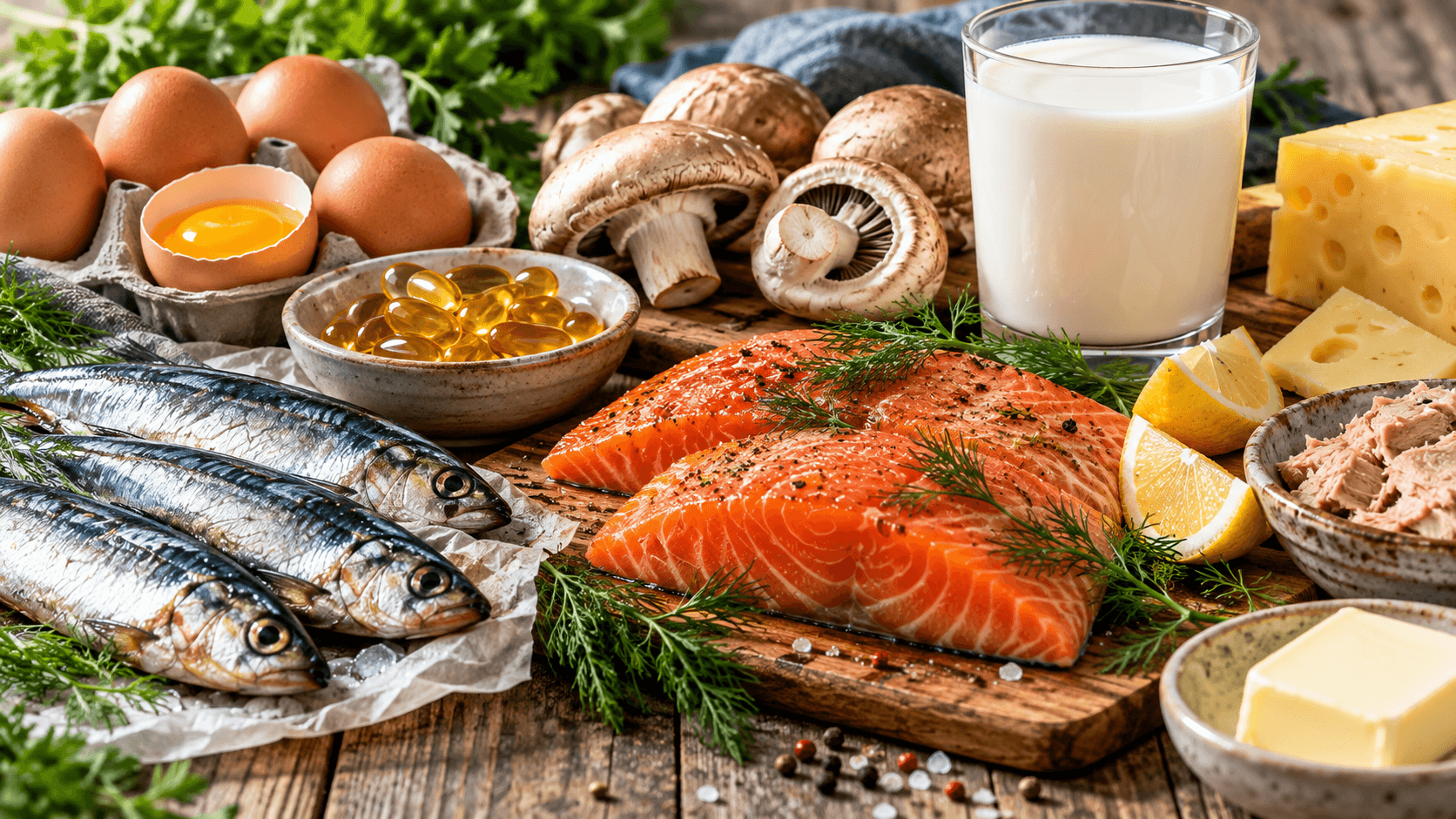
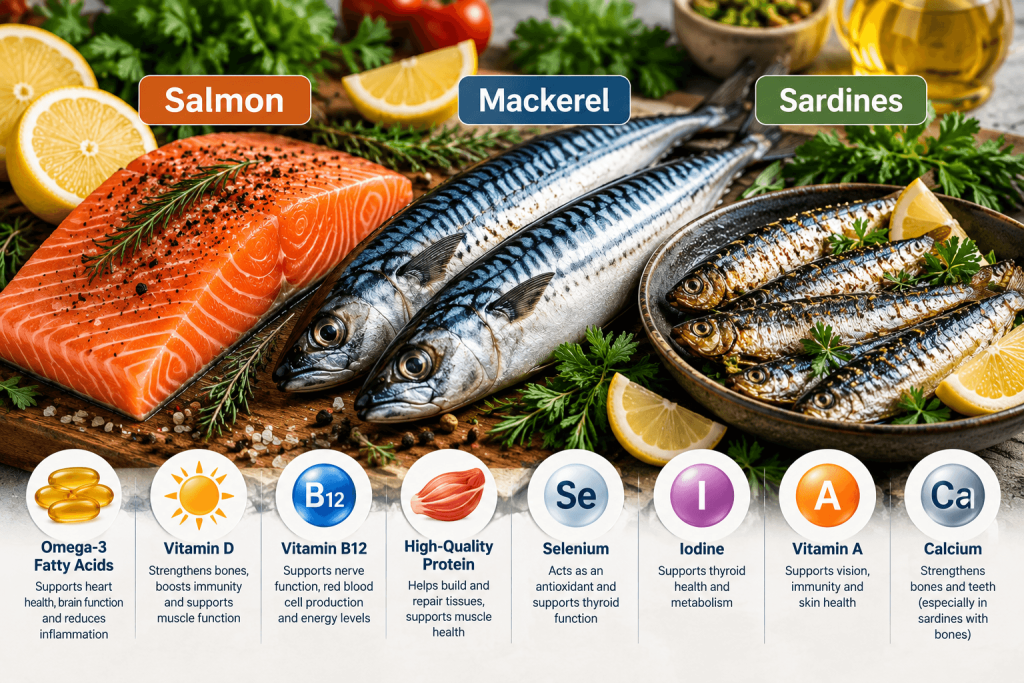
Fatty fish are among the best natural sources of vitamin D, which helps the body absorb calcium and supports healthy bones, muscles, and immune function. Salmon, mackerel, and sardines are also rich in omega-3 fatty acids (EPA and DHA), which play important roles in normal heart and brain function. Including oily fish in a balanced diet can be a convenient way to increase your intake of these important nutrients.
In addition to vitamin D and omega-3s, fatty fish provide high-quality protein, vitamin B12, selenium, iodine, and vitamin A. These nutrients support muscle repair, nervous-system function, thyroid health, immunity, and normal vision. Sardines are also a useful source of calcium, particularly when their soft edible bones are consumed.
Vitamin D Content
- Salmon (100g): around 500–600 IU
- Mackerel (100g): around 350 IU
- Sardines (100g): around 270 IU
Benefits
- Supports bone density
- Improves heart health
- Provides healthy fats and protein
Including fatty fish 2–3 times per week can significantly boost your vitamin D intake.
2. Egg Yolks
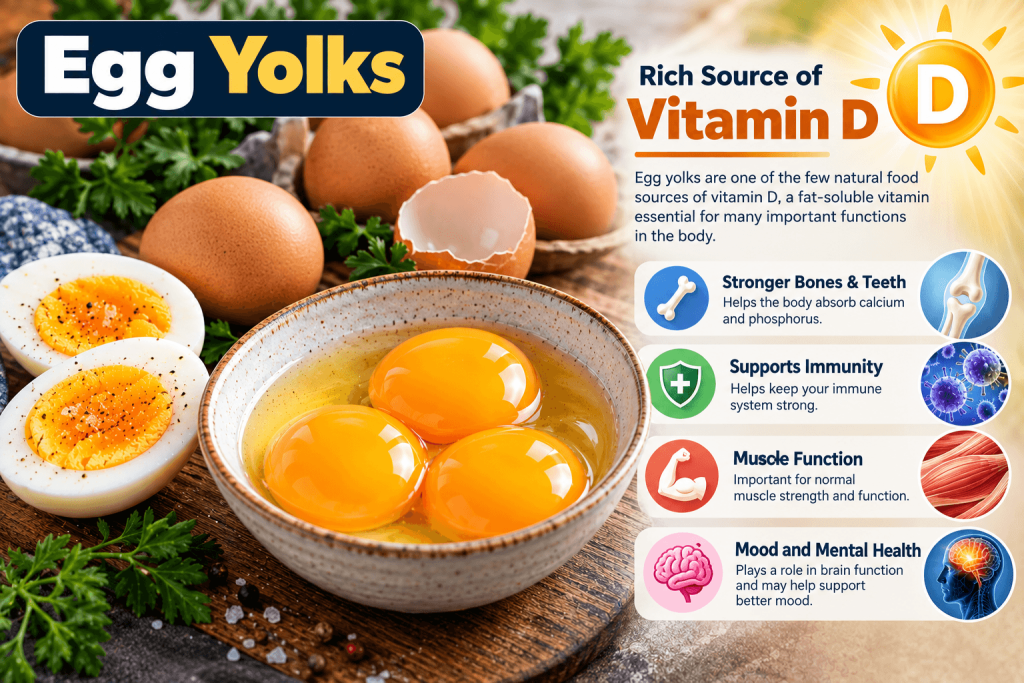
Eggs are a simple, affordable source of vitamin D, particularly in the yolk. While egg whites are mainly known for their high-quality protein, the yolk contains most of the egg’s vitamins, minerals, and healthy fats. The amount of vitamin D can vary depending on factors such as the hens’ diet and how the eggs are produced.
Vitamin D helps the body absorb calcium and phosphorus, making it important for maintaining healthy bones and teeth. It also contributes to normal muscle function and supports the immune system. Including eggs as part of a balanced diet can therefore contribute to overall vitamin D intake, although eggs alone may not provide enough vitamin D to meet daily needs.
Benefits
- Provides vitamin D and protein
- Supports muscle growth
- Easy to include in daily meals
Best Ways to Eat Eggs
- Boiled eggs
- Omelets
- Scrambled eggs
- Egg sandwiches
3. Mushrooms
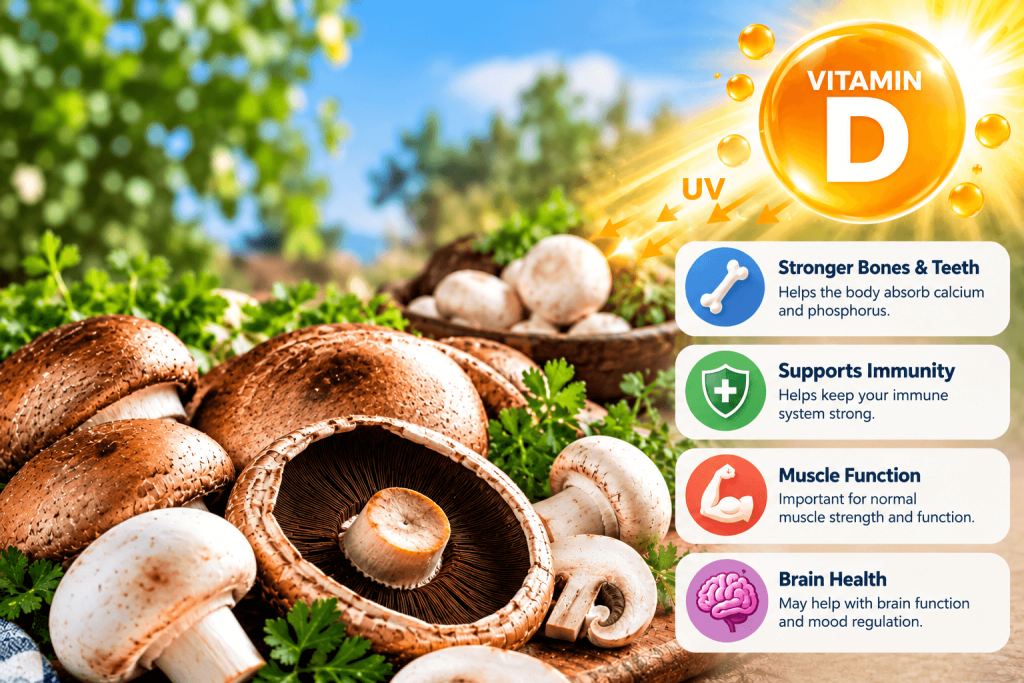
Mushrooms are one of the few plant-based foods that can provide meaningful amounts of vitamin D, making them particularly useful for vegetarians and vegans. Certain mushrooms naturally contain vitamin D2, while others can have much higher levels when they are exposed to ultraviolet (UV) light. They can therefore be a useful addition to the diet for people looking to increase their intake of vitamin D from food sources.
Some mushrooms produce vitamin D when exposed to sunlight or UV light, through a process involving compounds naturally present in the mushroom. UV-exposed mushrooms can contain considerably more vitamin D than mushrooms grown or stored without UV exposure. Vitamin D helps the body absorb calcium and phosphorus and contributes to normal bone, muscle, and immune function. When buying mushrooms specifically for vitamin D, check the packaging for information about UV exposure or vitamin D fortification.
Benefits
- Plant-based vitamin D source
- Supports immune health
- Low in calories and high in antioxidants
Popular Vitamin D Mushrooms
- Portobello mushrooms
- Maitake mushrooms
- Shiitake mushrooms
4. Fortified Dairy Products
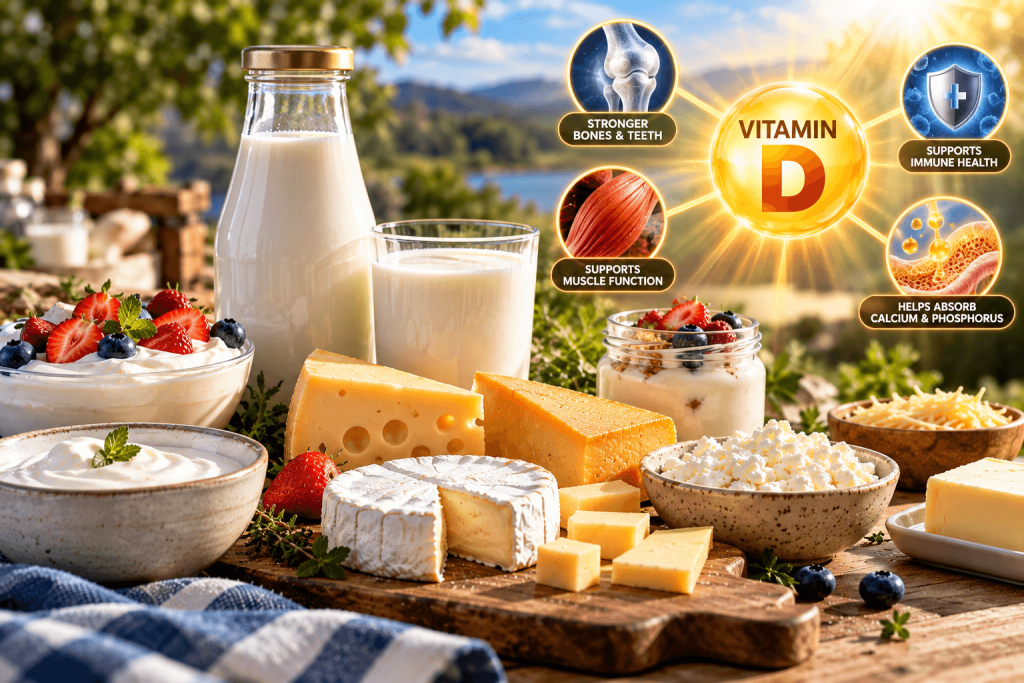
Many dairy products are fortified with vitamin D to help people increase their dietary intake of this essential nutrient. Vitamin D is naturally present in only small amounts in many foods, so fortified products such as milk and some yogurts can provide a convenient source. The amount of vitamin D varies between products, so checking the nutrition label can help you identify fortified options. Vitamin D helps the body absorb calcium and phosphorus, which are important for maintaining normal bones and teeth.
Examples
- Fortified milk – commonly fortified with vitamin D and can provide vitamin D alongside calcium.
- Fortified yogurt – some varieties contain added vitamin D, although levels vary between products.
- Fortified cheese – certain cheeses may be fortified with vitamin D, so the label should be checked for the actual amount.
Benefits
- Provides calcium and vitamin D together
- Strengthens bones and teeth
- Supports muscle function
Fortified dairy foods are particularly helpful for children and older adults who need extra support for bone health.
5. Cod Liver Oil
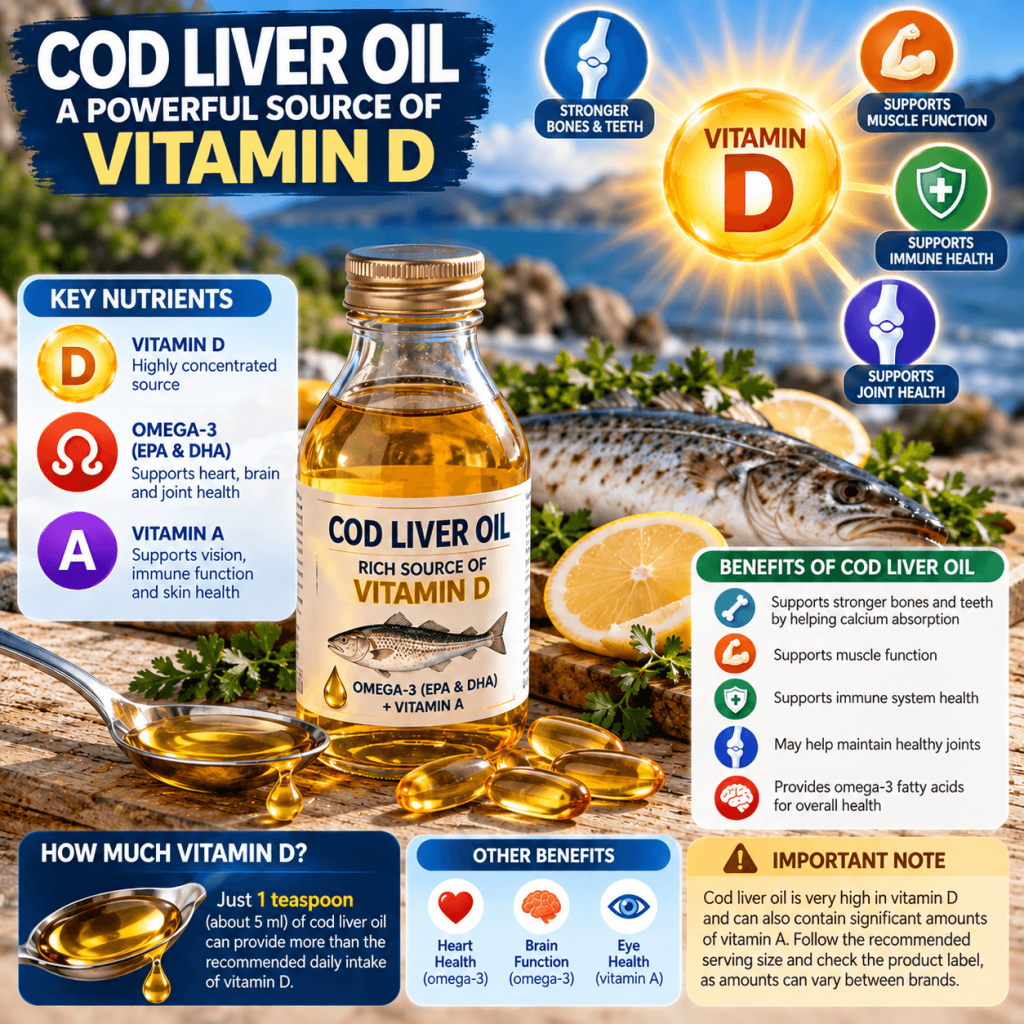
Cod liver oil is one of the richest dietary sources of vitamin D. Vitamin D helps the body absorb calcium and phosphorus, supporting normal bones, teeth, and muscle function. Cod liver oil also contains omega-3 fatty acids (EPA and DHA) and naturally occurring vitamin A.
The amount of vitamin D varies by product, so always check the label for the exact amount. A small serving can provide a substantial amount of vitamin D, but it is important not to exceed the recommended serving because cod liver oil can also contain significant amounts of vitamin A.
Nutritional Benefits
- Extremely rich in vitamin D
- Contains omega-3 fatty acids
- Supports bone and joint health
Just one teaspoon of cod liver oil can provide more than the recommended daily intake of vitamin D.
6. Fortified Cereals and Plant-Based Milk
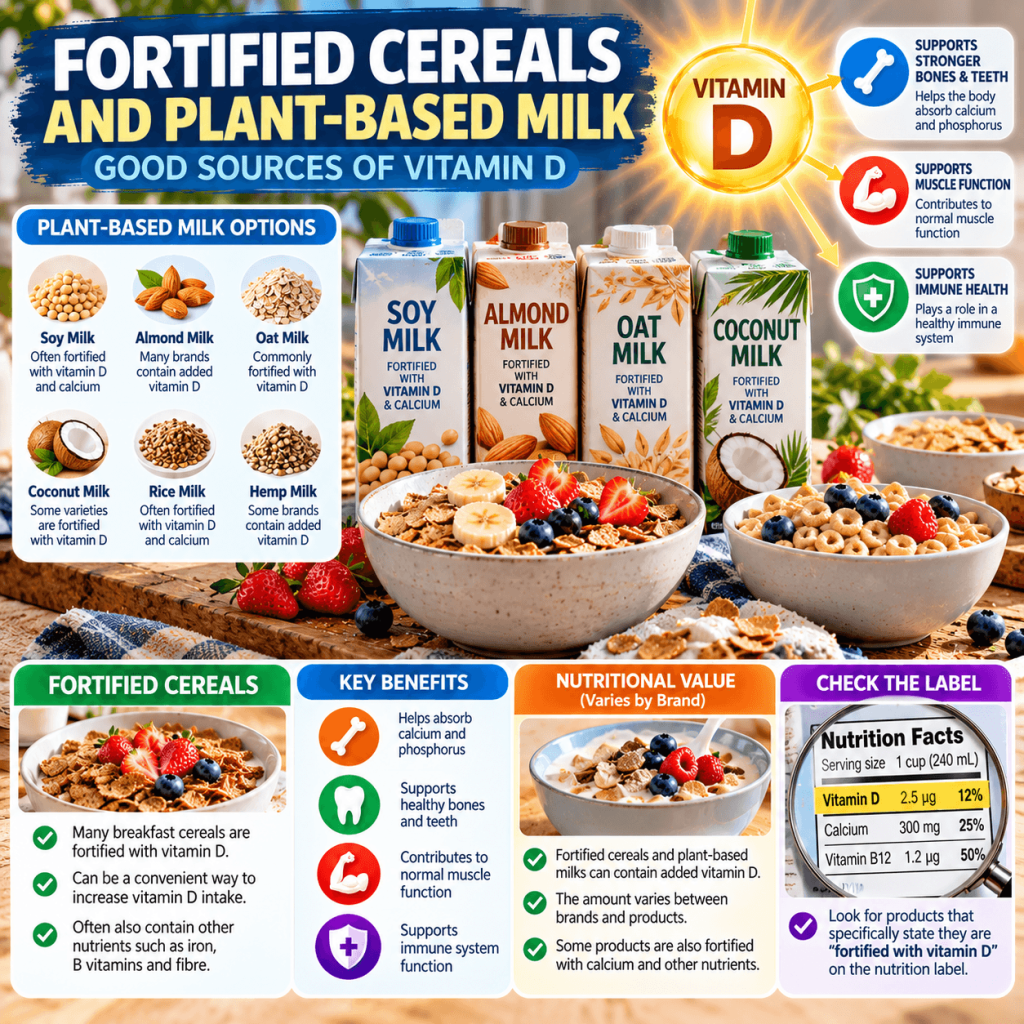
For people who avoid dairy, many plant-based milk and dairy alternatives are fortified with vitamin D to help increase dietary intake. Fortified soy, almond, oat, coconut, and other plant-based drinks can provide added vitamin D, although the amount varies between brands and products. Vitamin D helps the body absorb calcium and phosphorus and contributes to maintaining normal bones, teeth, muscles, and immune function. Some fortified plant-based alternatives also contain added calcium, making them a convenient option for people who do not consume conventional dairy products. Always check the nutrition label to confirm the vitamin D content.
Examples
- Almond milk
- Soy milk
- Oat milk
- Breakfast cereals
Benefits
- Suitable for vegans
- Easy way to increase vitamin D intake
- Convenient breakfast option
How Much Vitamin D Do You Need?
The amount of vitamin D your body needs can vary depending on your age and individual circumstances. Vitamin D is important for calcium absorption, healthy bones and teeth, normal muscle function, and immune-system function. Recommended intakes are generally expressed in micrograms (mcg) or International Units (IU), with 1 mcg of vitamin D equal to 40 IU.
Recommended Daily Intake
Age Group | Typical Recommended Intake |
Infants | 400 IU (10 mcg) |
Children & Adults | 600 IU (15 mcg) |
Adults over 70 | 800 IU (20 mcg) |
These figures are commonly used international reference values, but recommendations can differ between countries and health authorities. Your vitamin D needs may also be affected by factors such as limited sunlight exposure, darker skin, age, diet, clothing that covers most of the skin, and certain health conditions. People who have little exposure to sunlight may therefore need to pay particular attention to dietary sources or supplements. If you are concerned about vitamin D deficiency or considering high-dose supplementation, it is best to discuss your individual needs with a healthcare professional.
Signs of Vitamin D Deficiency
Vitamin D deficiency is common worldwide, particularly among people who have limited sunlight exposure or low dietary intake. Some people may have no obvious symptoms, while others can experience fatigue, bone or muscle pain, muscle weakness, frequent illness, and changes in mood.
If vitamin D levels remain low for a prolonged period, the body may have difficulty absorbing enough calcium to maintain healthy bones. Severe or long-term deficiency can contribute to weakened bones, an increased risk of fractures, and conditions such as osteomalacia or osteoporosis, particularly in vulnerable groups.

Also know about: Top 10 Vitamin Deficiencies and How to Fix Them Naturally
How to Maintain Healthy Vitamin D Level Naturally
Get Regular Sunlight
The body can produce vitamin D when bare skin is exposed to sunlight containing UVB rays. However, the amount produced depends on factors such as season, time of day, skin tone, age, clothing, and how much skin is exposed. In the UK, sunlight is generally not strong enough to produce sufficient vitamin D during the winter months, so dietary sources and supplements may become more important.
Combine Vitamin D with Calcium
Vitamin D helps the body absorb calcium, making both nutrients important for maintaining healthy bones and teeth. Include calcium-rich foods such as milk, yogurt, cheese, fortified plant-based drinks, and leafy green vegetables as part of a balanced diet.
Eat a Nutrient-Dense Diet
Choose a varied diet containing foods that provide vitamin D and other nutrients involved in bone and muscle health. Useful options include oily fish, eggs, fortified foods, mushrooms exposed to UV light, dairy or fortified plant-based alternatives, and calcium-rich foods. A balanced diet can help provide a wider range of nutrients rather than relying on a single food source.
Final Thoughts
Vitamin D plays an important role in maintaining healthy bones and teeth, supporting normal muscle function, and contributing to a healthy immune system. Because vitamin D is found naturally in relatively few foods and sunlight exposure varies throughout the year, including dietary sources such as fatty fish, eggs, UV-exposed mushrooms, fortified dairy or plant-based products, and cod liver oil can help increase vitamin D intake.
A balanced approach that combines appropriate sunlight exposure, vitamin D-rich foods, and supplements when recommended can help support healthy vitamin D levels. Remember that individual needs vary, and taking excessive amounts of vitamin D supplements can be harmful. If you are concerned about deficiency or your vitamin D intake, speak with a healthcare professional for personalised advice.